


Home
Simplifying parcel pickup workflows
0-to-1 Product • Logistics • Web & Android • MVP
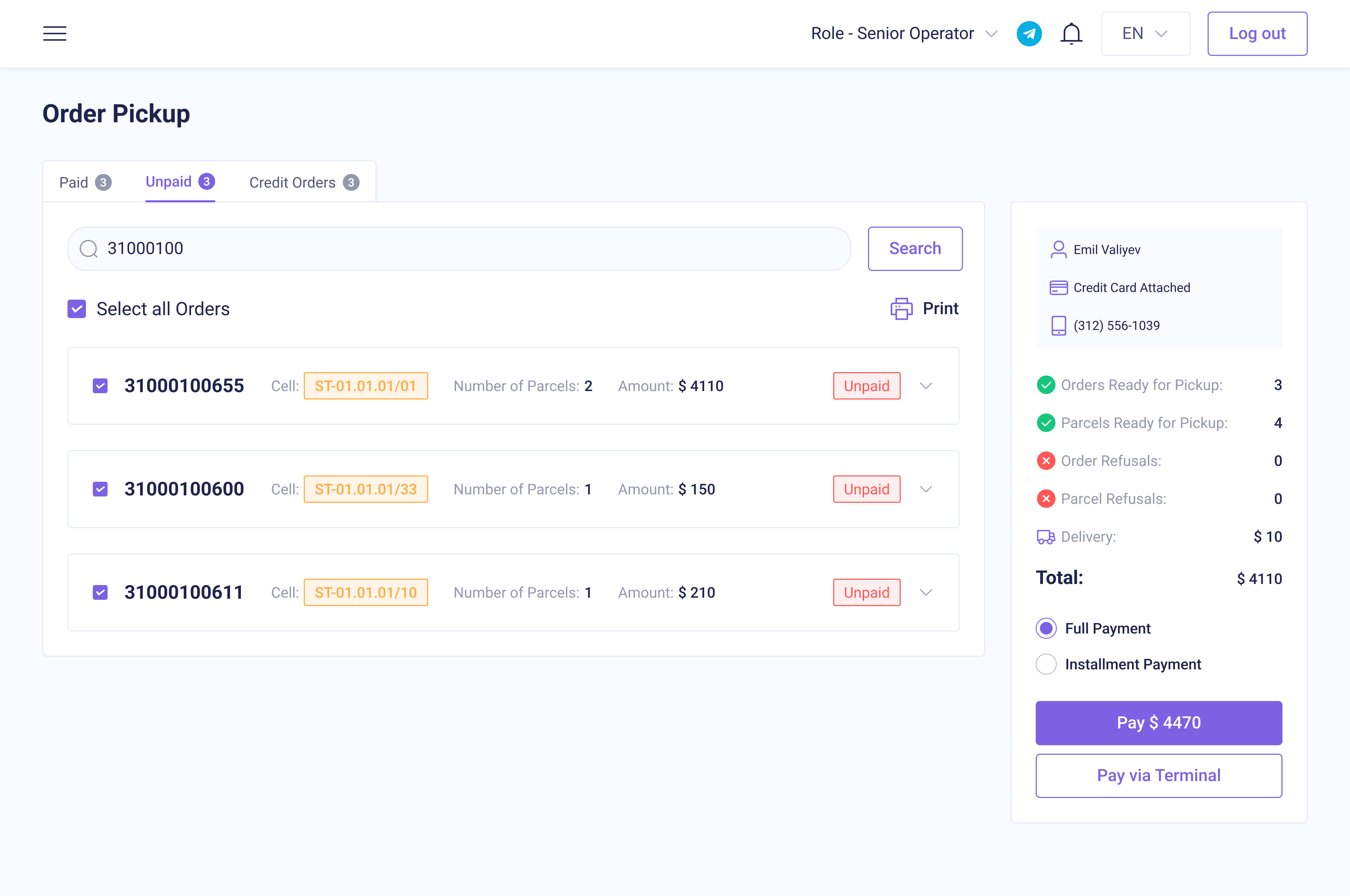
Building a digital workflow that connects customers, couriers, and parcel operations. I designed the full warehouse platform across web and Android used daily by operators across 300+ pickup locations.
I owned the design of a 0-to-1 warehouse platform that started with no predefined requirements. I observed operations on-site, defined workflows for the web app and Android scanners, tested concepts with operators, and adapted Element Plus with the team to ship the MVP on a tight timeline.
Details
Web & Android
platform
Product Designer
role
Product Manager, Business Analyst, Developers, QA
team members
300+ pickup locations
scale
0-to-1 Product Design · AI-assisted Prototyping · On-site Research · Interaction Design for Web & Android · Usability Testing
scope
I used AI throughout the project to work faster with real operational complexity. I transcribed and synthesized warehouse observations and operator interviews, grouping issues by flow stage to find recurring problems. I generated realistic test data, hundreds of orders, parcels, barcodes, and statuses, so prototypes behaved like a real warehouse. I mapped scanner edge cases such as wrong boxes, duplicates, lost connection, and partially received deliveries. And I built quick interactive prototypes for usability testing and team discussions.
Product Impact
results after launch
−50%
Cost per
parcel
Reduced through workflow optimization
×4
Higher parcel
throughput
Enabled by simplified operations
−27%
Operational
errors
Reduced with guided workflows
+42%
Faster task
completion
Through streamlined workflows
BUSINESS GOAL
Scaling revenue meant digitizing the warehouse first
Enable the logistics business to scale and generate revenue through warehousing, packaging, and fulfillment services.
BUSINESS PROBLEM
Without one system, every location ran its own process
•
Warehouse operations relied on fragmented manual processes and spreadsheets
•
No unified system existed to manage the full parcel lifecycle
•
Operational processes varied between warehouses, making scaling across 300+ pickup locations difficult
•
Operators relied on personal experience instead of standardized workflows, resulting in inconsistent execution
PRODUCT CONSTRAINTS
The warehouse had to be digitized without stopping it
•
No predefined product requirements at project kickoff
•
MVP delivery under a tight implementation timeline
•
The solution had to support both responsive web and Android handheld scanners
DESIGN 1/2 · ORDER PICKUP
Order Pickup Make a new operator as fast as an experienced one
Order Pickup is how parcels leave the warehouse: operators search for an order, verify the customer and payment, take payment, confirm collection, and update the status. Doing this quickly depended on operator experience. The interface had to guide each step, so any operator at any location could work the same way.
FINAL SOLUTION
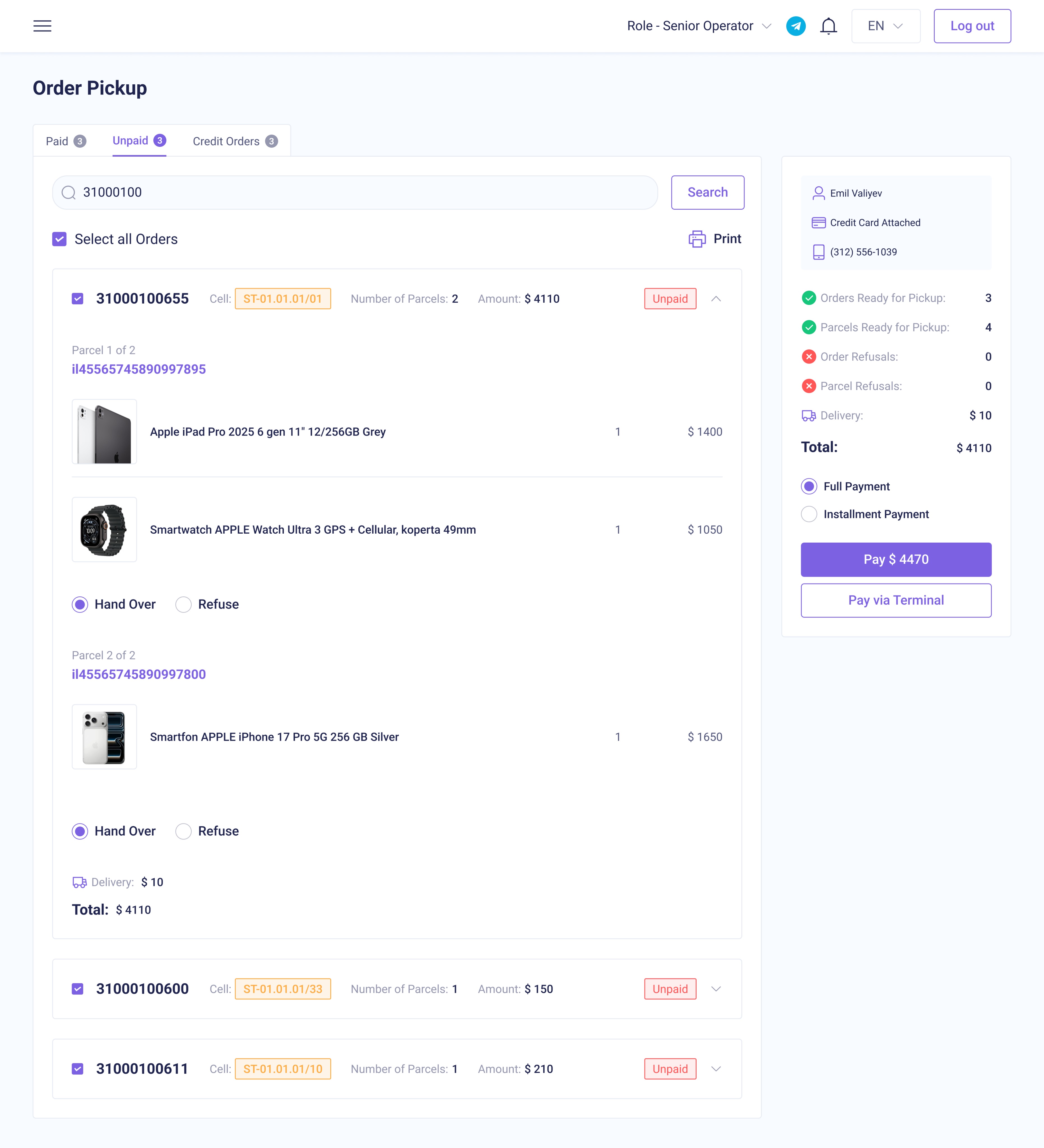
Final design Information follows the task
The screen shows only what the current step needs. Primary actions like Hand Over and Refuse stay on each parcel, order details remain visible throughout, and extra information expands inline only when needed. Handover is confirmed with a one-time code sent to the recipient, so parcels can’t go to the wrong person.
DESIGN SYSTEM
Element Plus Reuse cut implementation time by 35%
I used Element Plus as the foundation for the web interface, adapting the existing component library to the product’s workflows and visual language. Reusing established components allowed the team to move faster while keeping the experience consistent across the product.
HYPOTHESIS
I hypothesized that keeping key actions in one place would help warehouse staff complete pickups faster and with fewer mistakes.
ITERATION
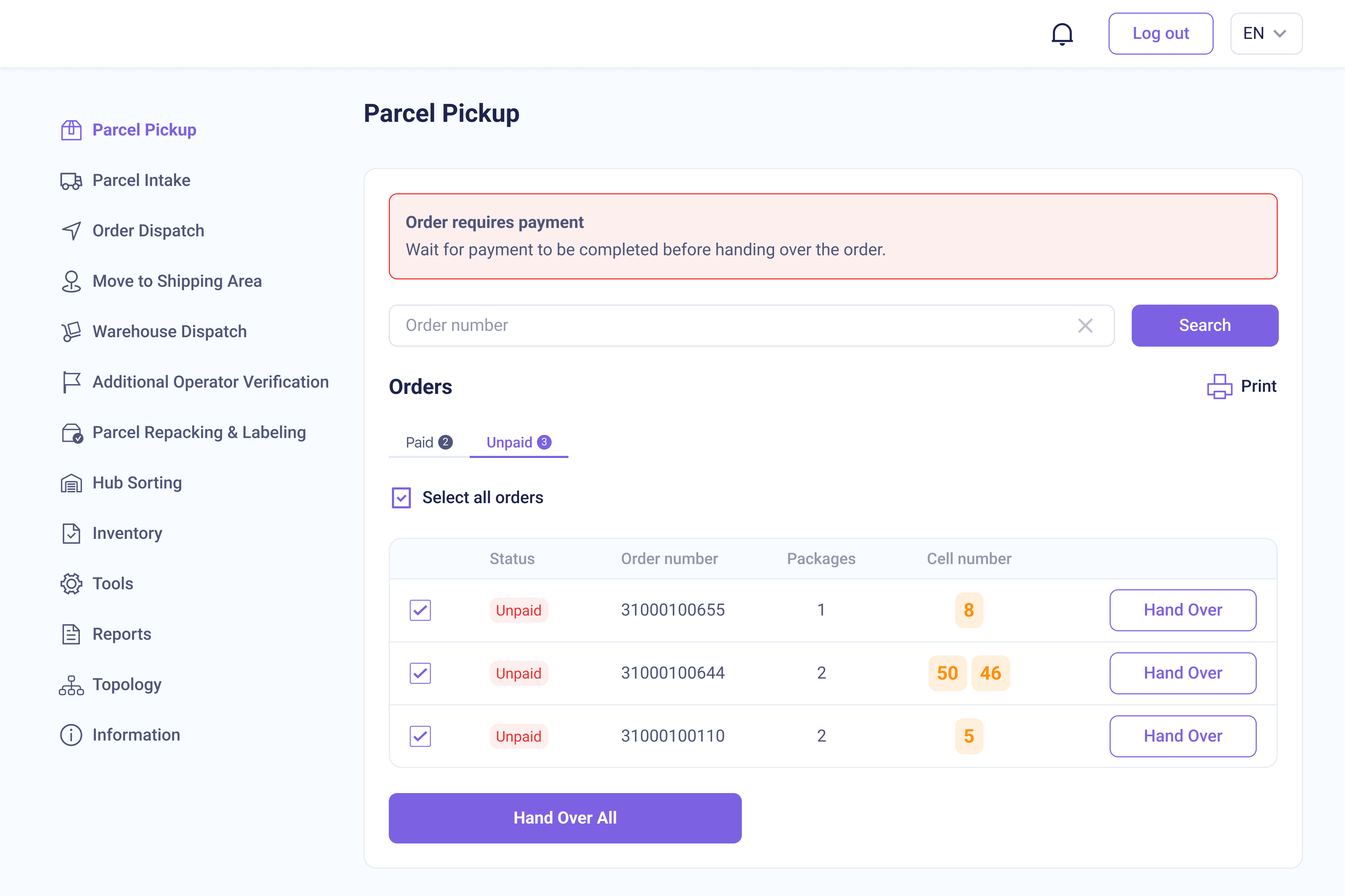
Concept A Everything in one view
The first concept kept all order information in one place to reduce navigation and give operators a complete view of each order.
USABILITY TESTING
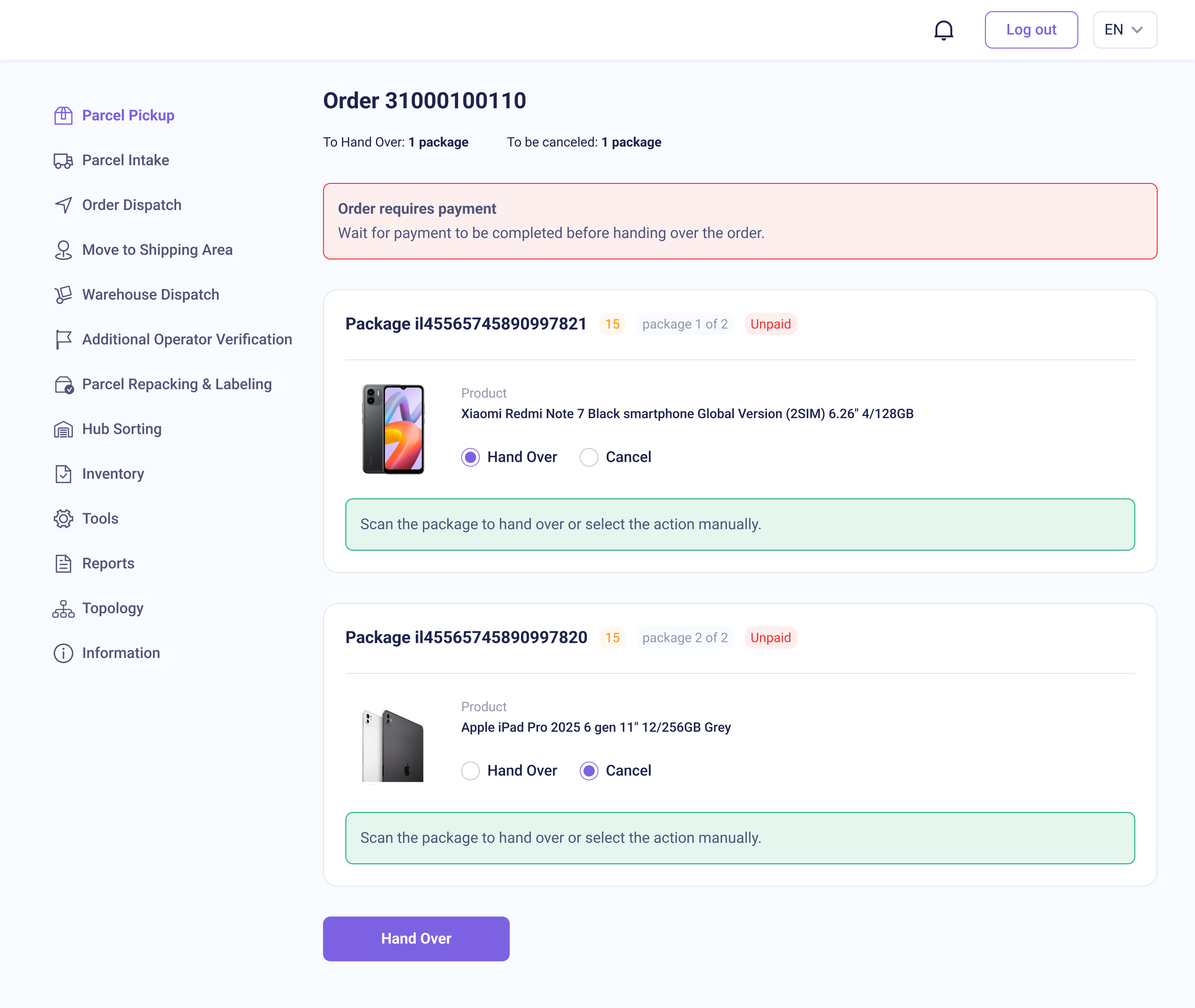
Validation Information wasn’t the problem, guidance was
During testing, operators still spent time looking for the next action, which slowed down the pickup process. This showed the interface needed to prioritize the operator’s next action rather than showing all order information at once.
DESIGN 2/2 · BOX INTAKE
Box Intake Every scan had a price
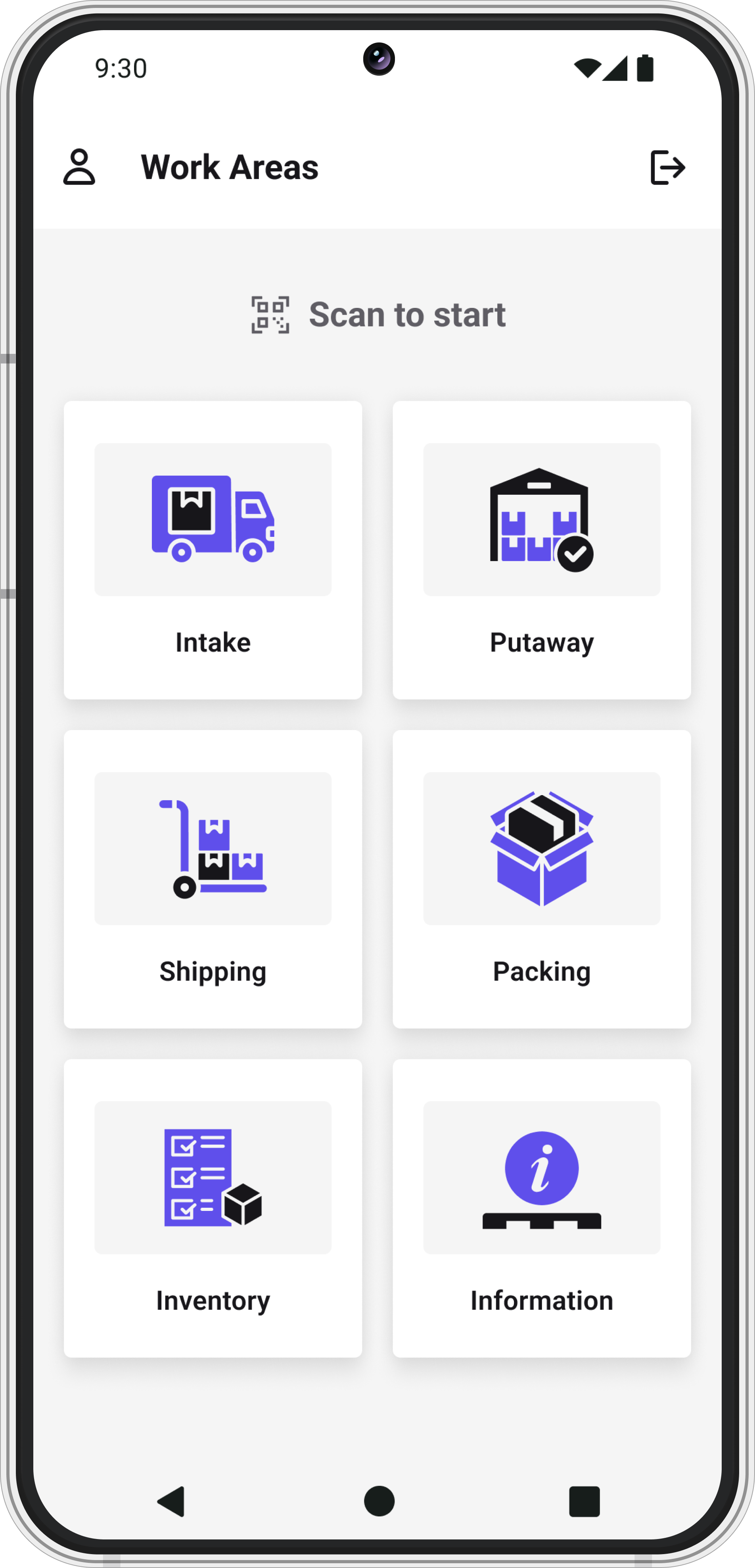
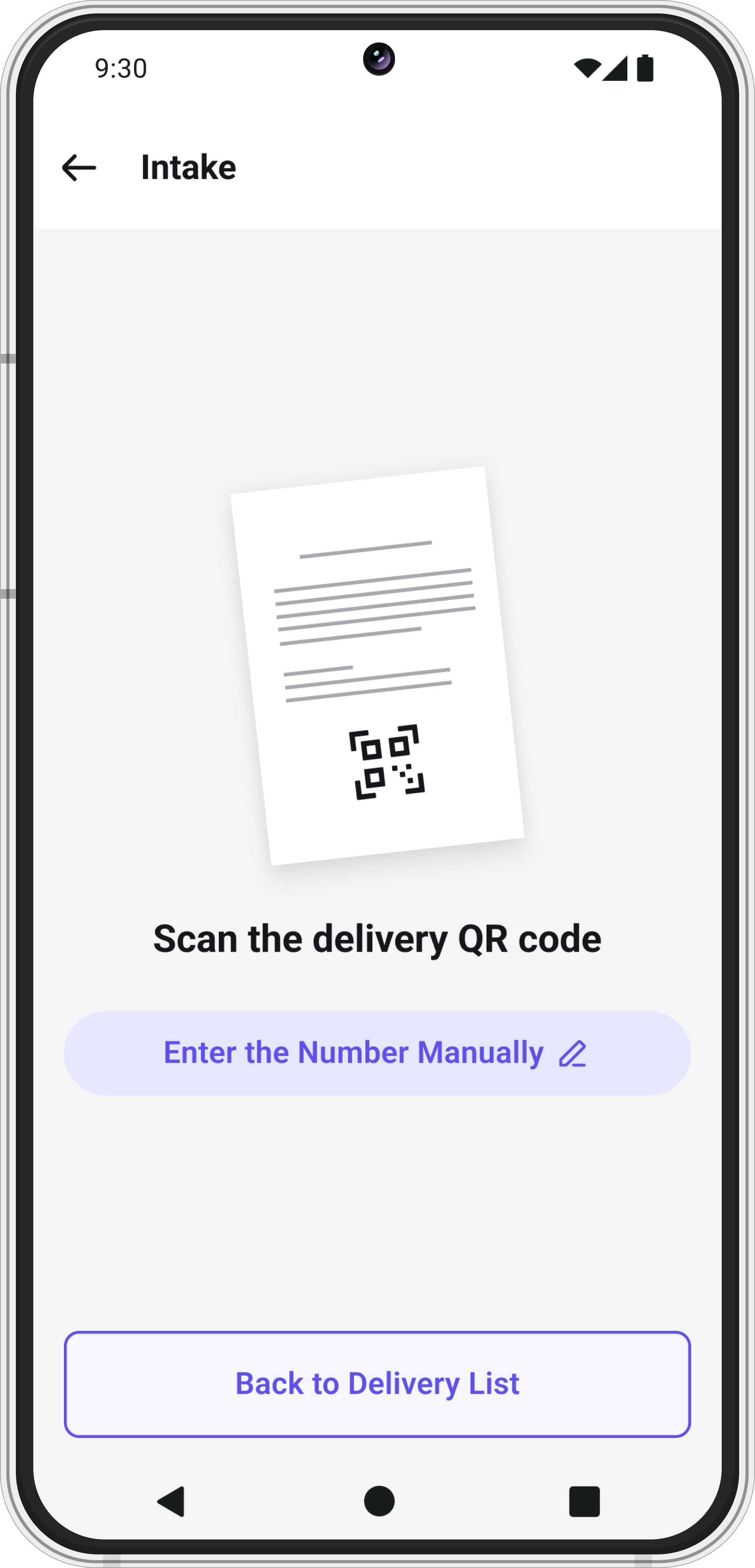
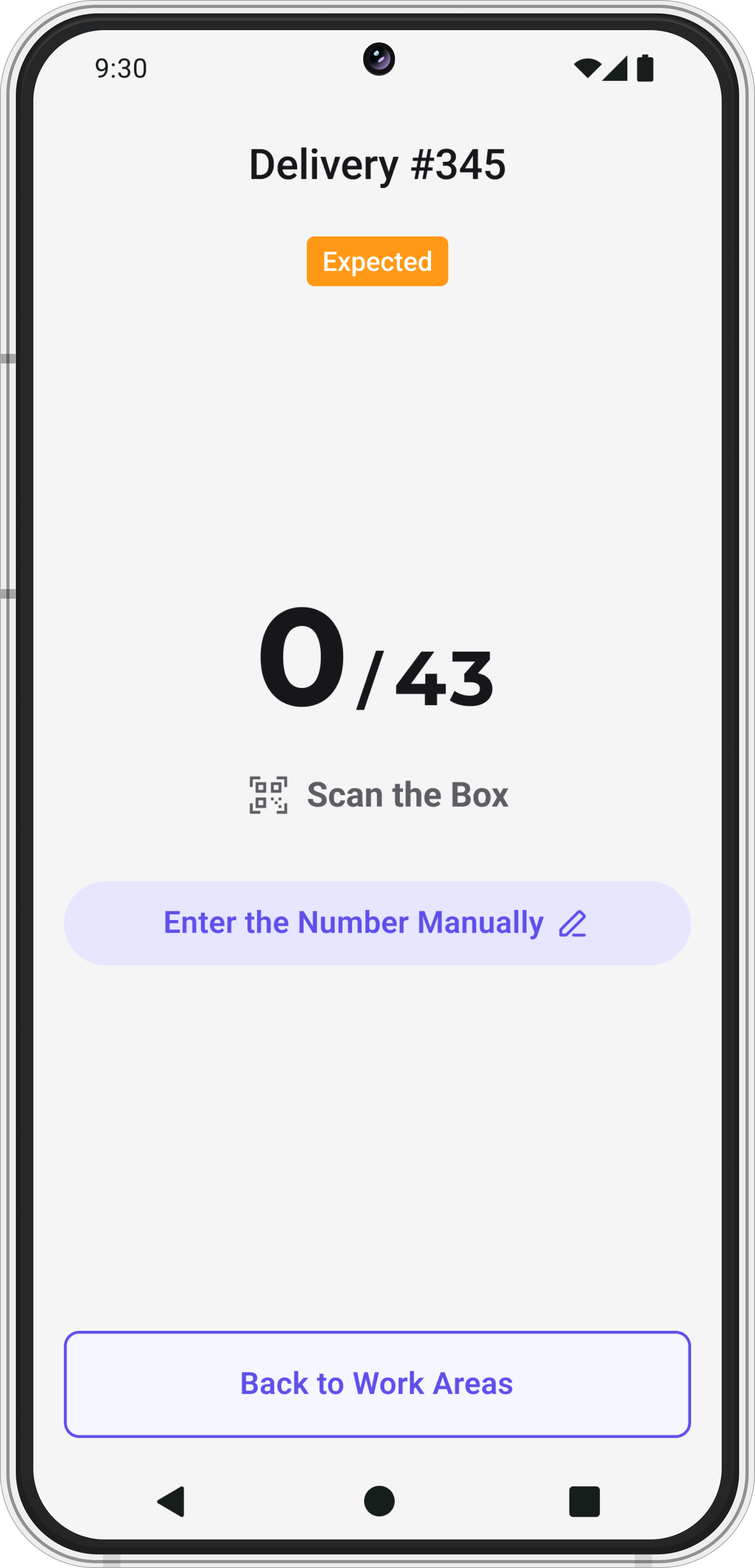
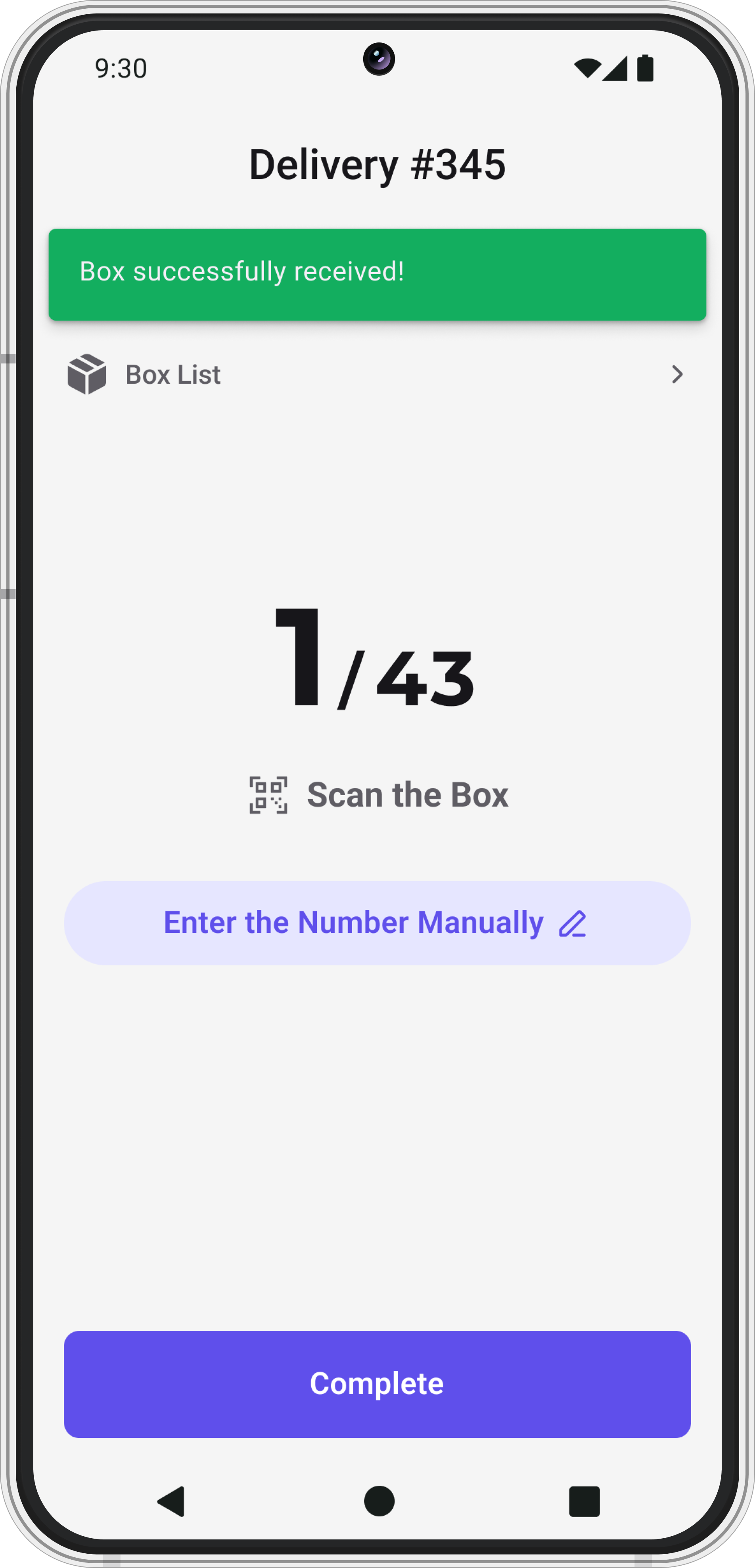
Parcel intake was one of the highest-frequency operations in the warehouse, and every scanned parcel added to operational cost, so speed and accuracy directly shaped the cost per parcel. I designed an Android scanner workflow where several operators process a delivery at once, while the system validates parcels and syncs data automatically.
OPERATIONAL CONTEXT
Operators were paid per scan, so every extra tap cost them money
They processed thousands of parcels per shift on Android handheld scanners with small screens, scanning continuously for hours, and the MVP had a tight delivery timeline. Even a small delay multiplied across thousands of scans a day, slowing both individual earnings and warehouse throughput.
Work Areas
Scan Delivery
Start Scanning
Successful Scan
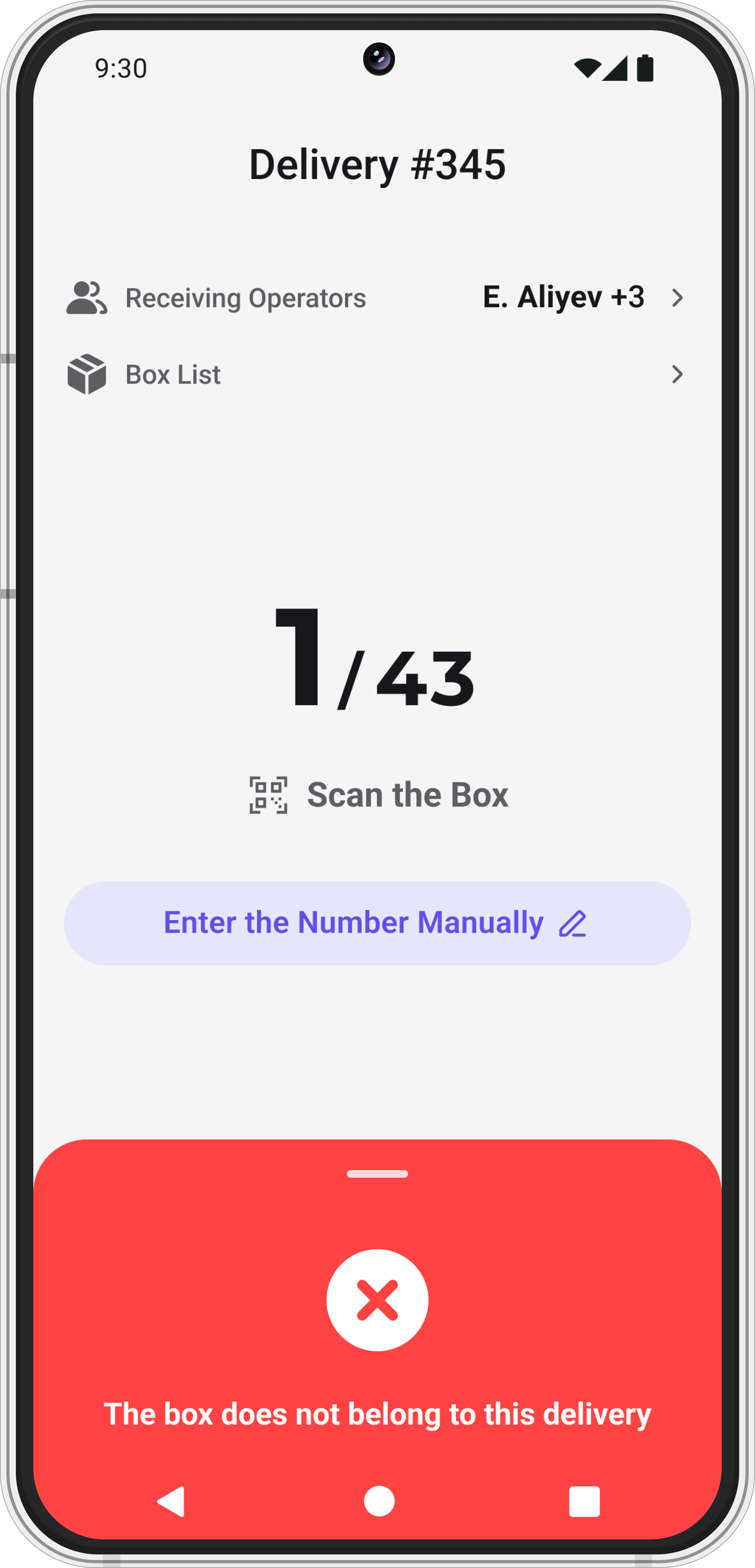
Error Handling
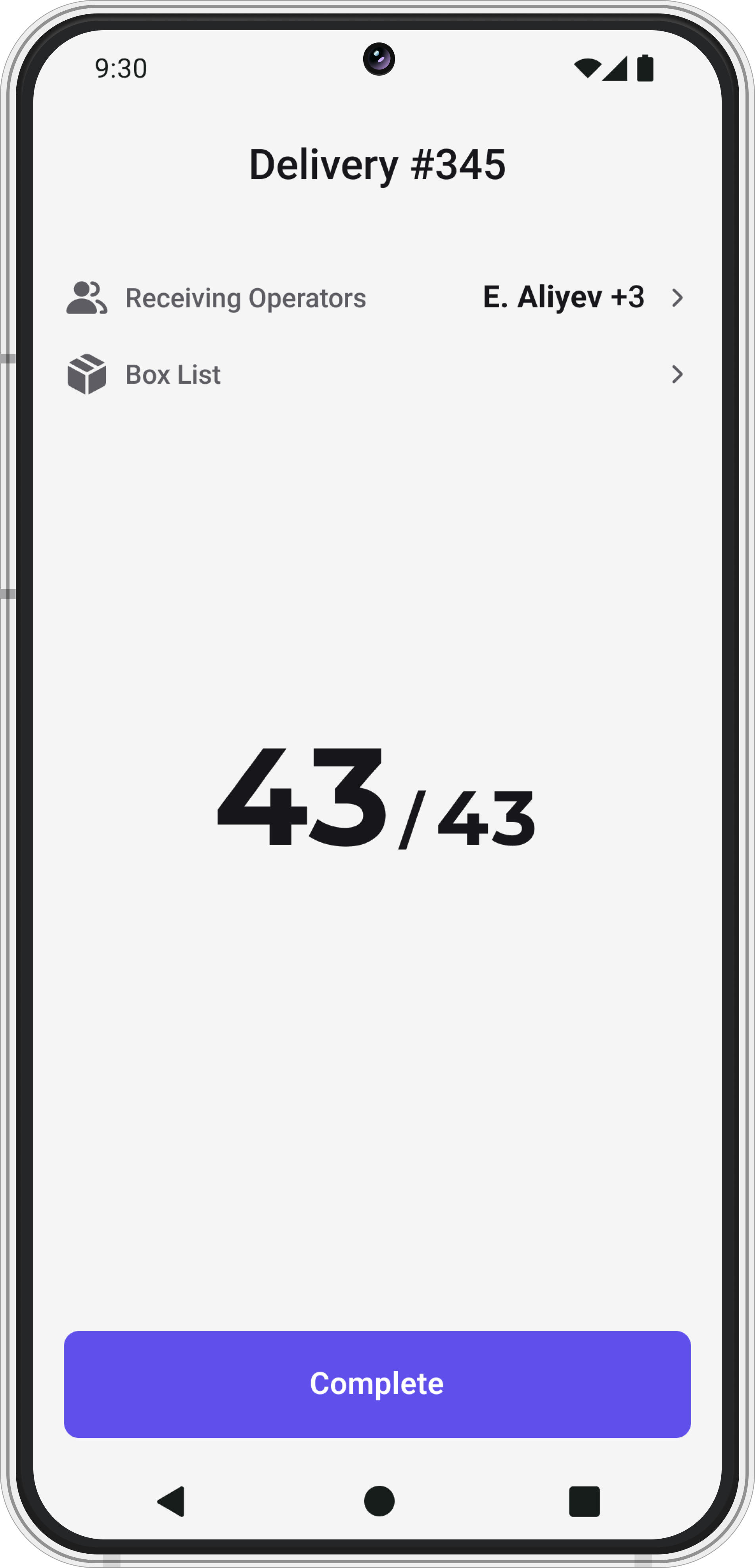
Delivery Complete
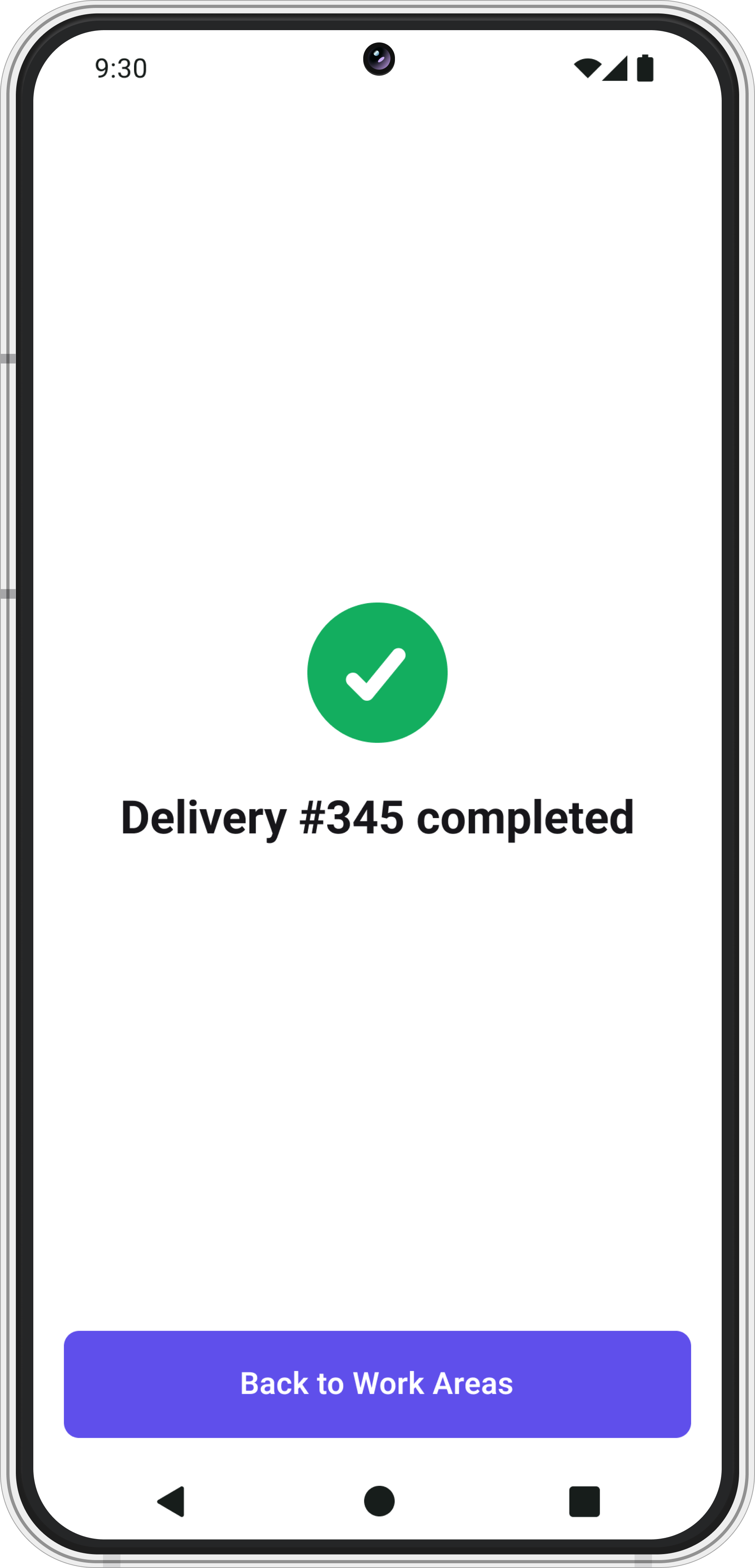
Completion
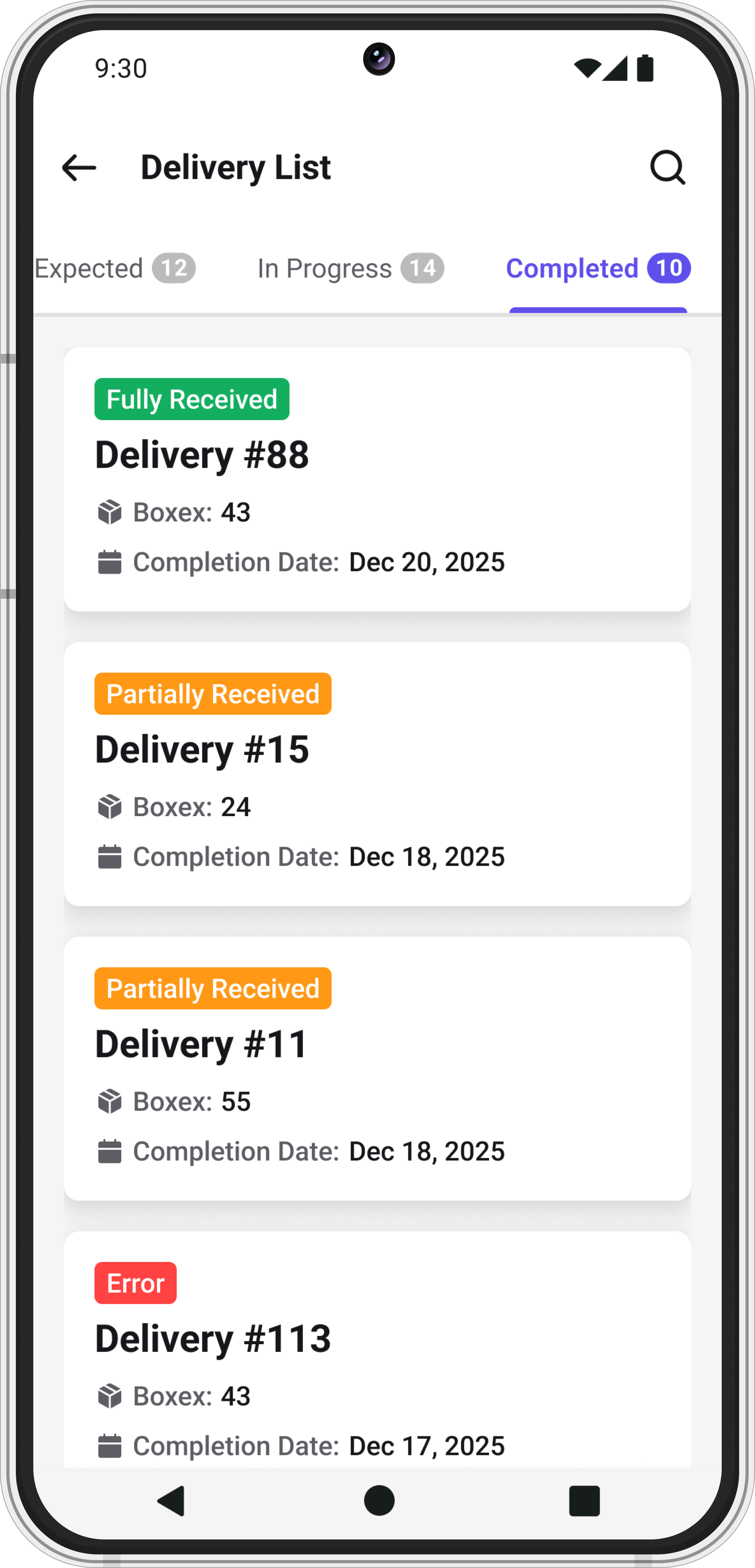
Delivery List
FINAL SOLUTION
Final design Keep operators in the scanning rhythm
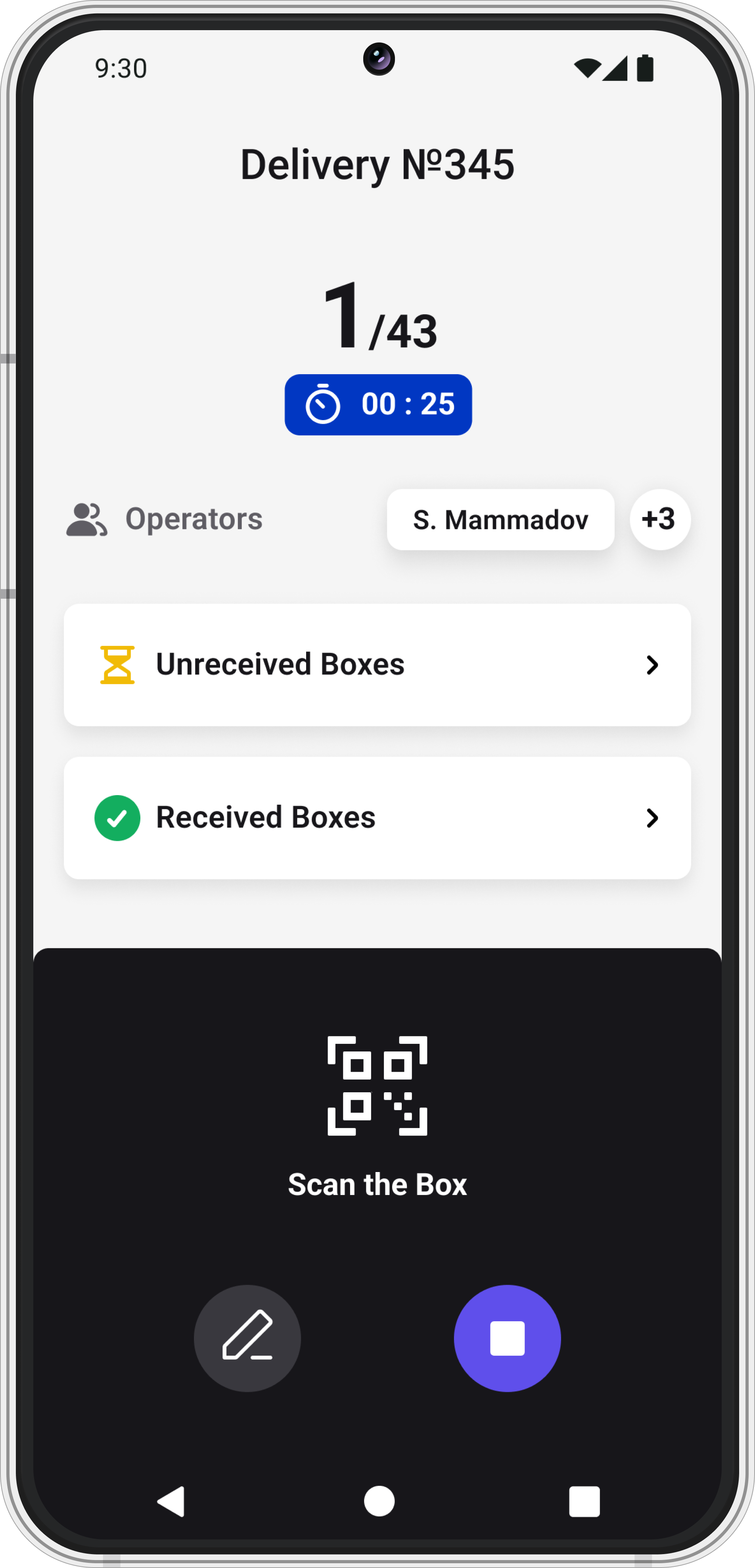
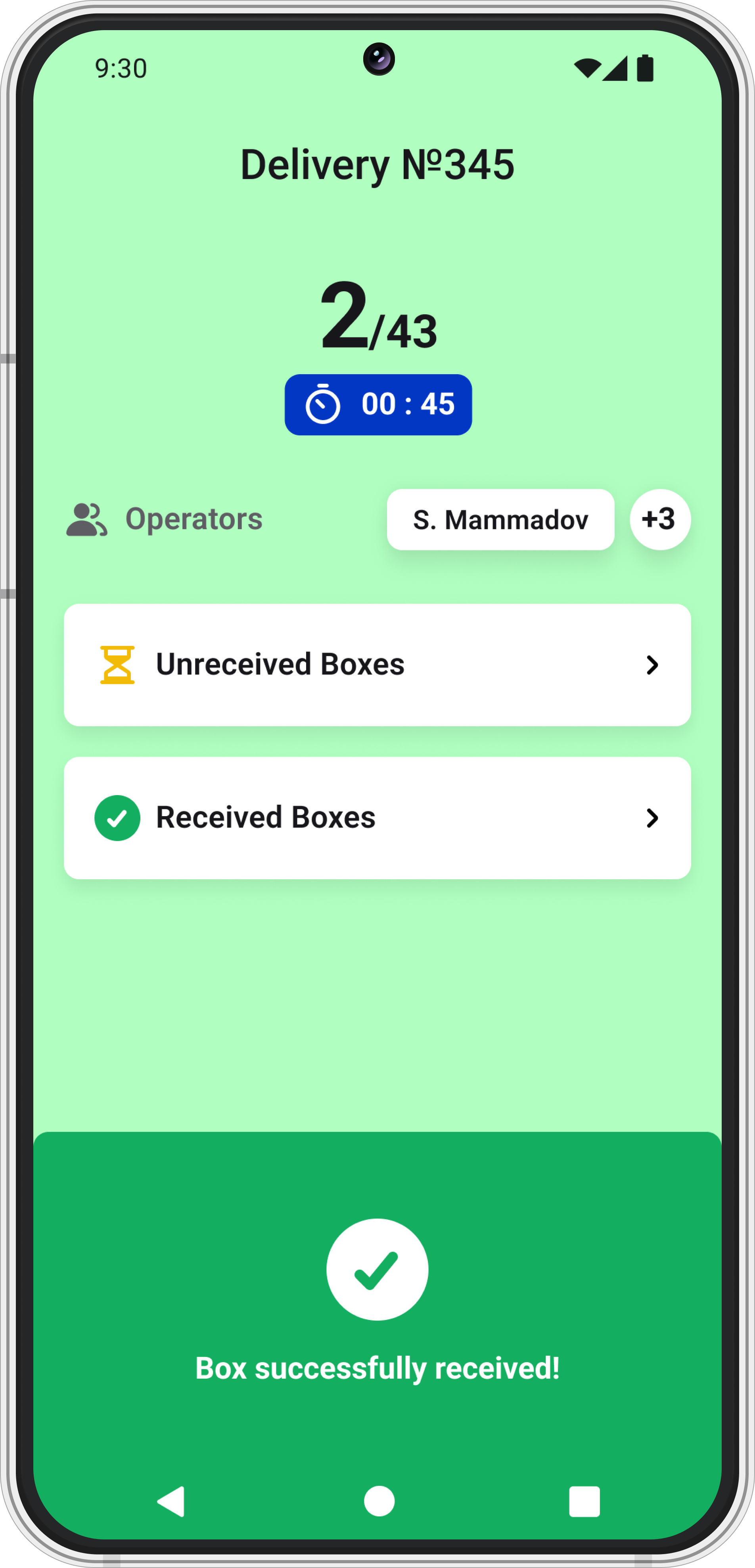
Instead of interrupting operators with a confirmation screen after each scan, the final design uses persistent progress, lightweight feedback, and simplified completion actions. Testing confirmed that operators completed intake faster, with fewer interruptions and the same accuracy.
RESEARCH
On-site observation Seeing intake in practice
I visited the warehouse to observe parcel intake. Seeing the workflow firsthand helped me understand the physical constraints of high-frequency scanning and identify where small interactions could slow operators down.
HYPOTHESIS
I hypothesized that reducing interruptions during continuous scanning would help operators process parcels faster, reduce operational effort, and improve overall warehouse throughput.
ITERATION
Concept A Big confirmations broke the rhythm
The first concept prioritized explicit confirmation after every successful scan, with large success states, a prominent progress counter, oversized controls, and a personal productivity counter. Testing showed that confidence wasn’t the bottleneck, continuity was. Operators preferred to keep scanning without stopping, and they found the pause icon unclear as a completion action.
KEY INSIGHTS
Small interactions have measurable business impact
•
High-frequency warehouse workflows require balancing speed, accuracy, and cognitive effort rather than optimizing a single metric
•
Direct warehouse observation and early prototype validation uncovered workflow problems that analytics alone couldn’t reveal
•
Consistent interaction patterns reduce cognitive effort and help operators maintain speed during repetitive tasks
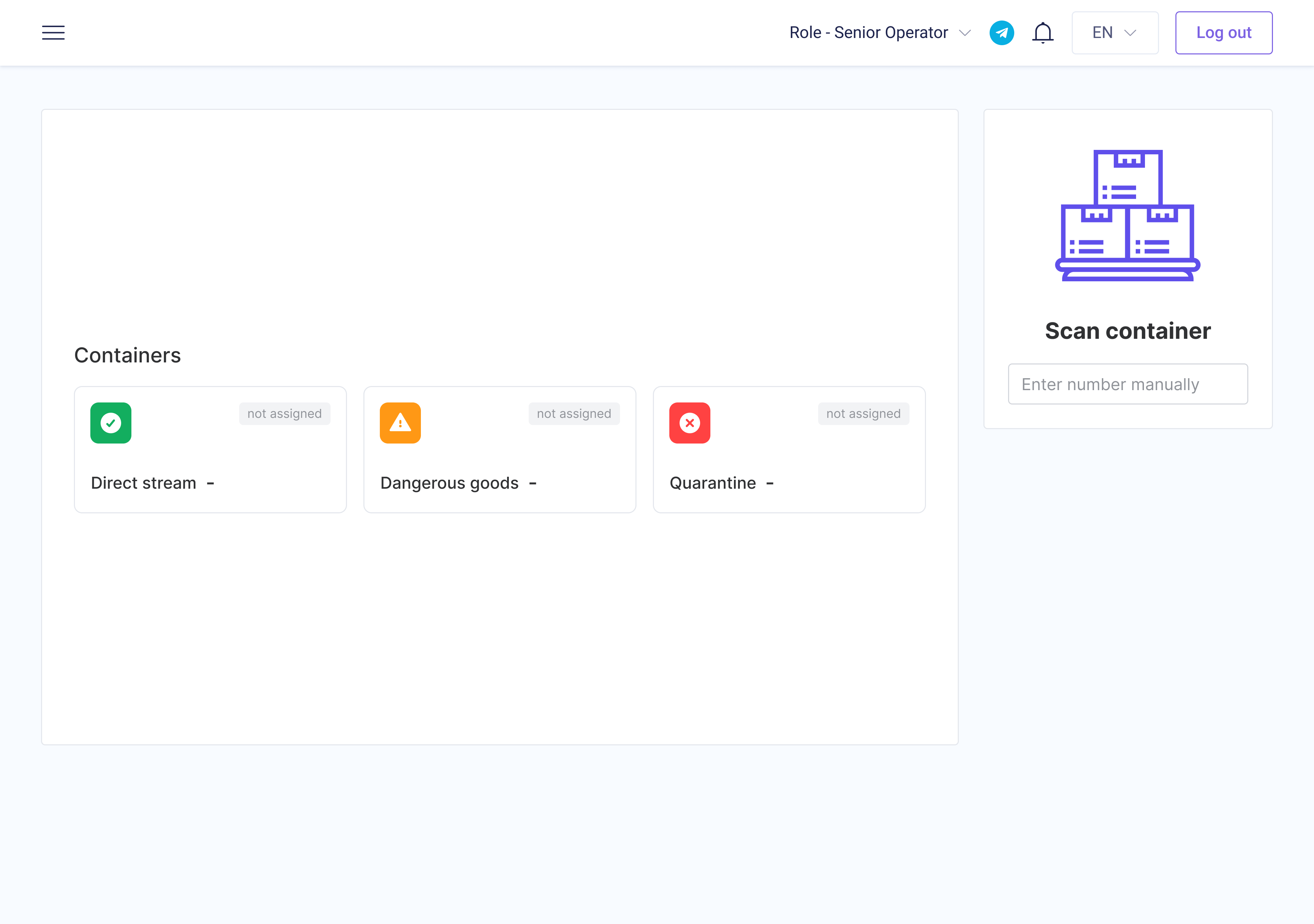
Before intake, operators scan a container and route it to direct stream, dangerous goods, or quarantine
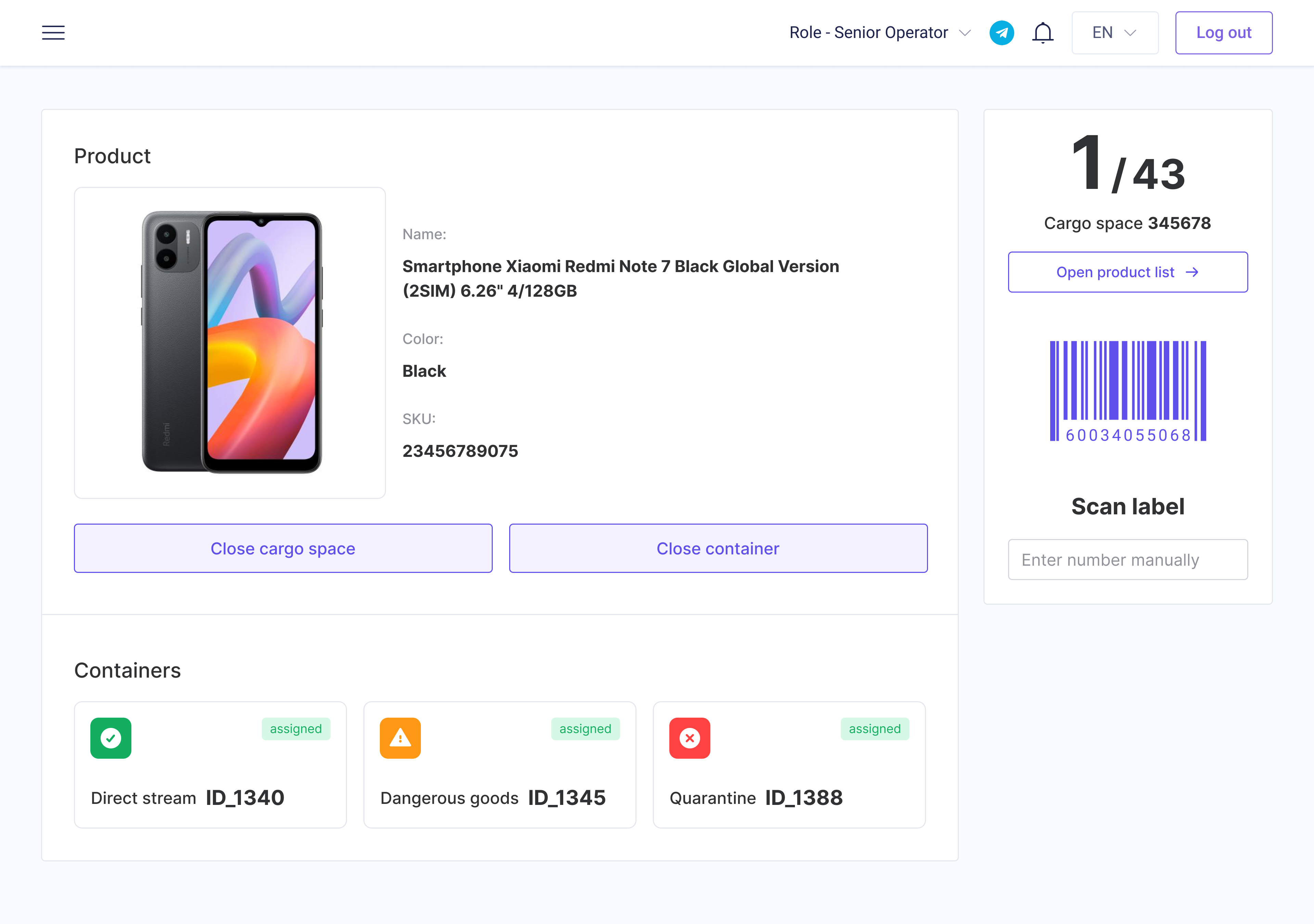
Each parcel’s label is scanned into its cargo space, with product details and the assigned container visible at a glance
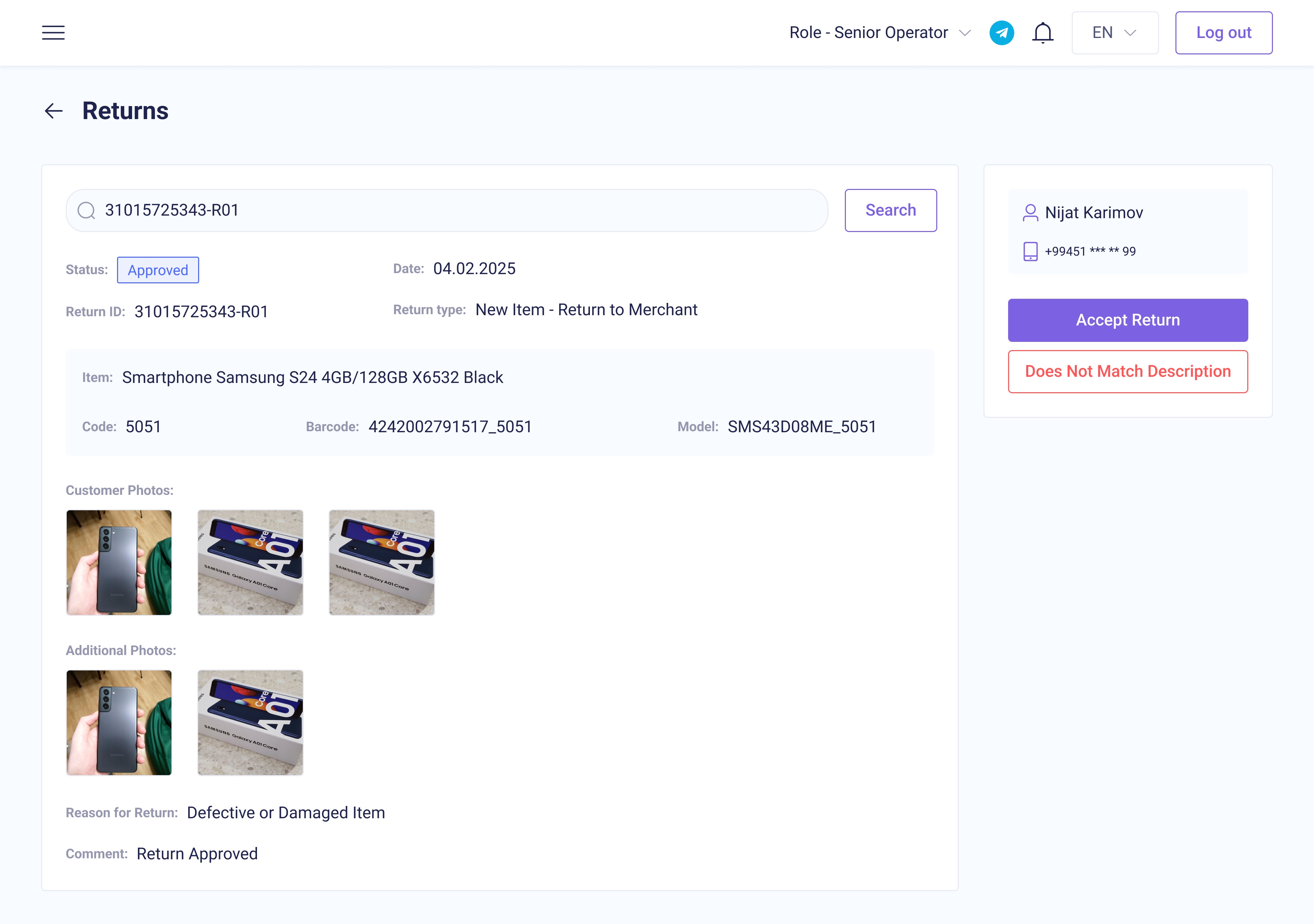
Returns are checked against customer photos and the return reason, so operators can accept or reject them in one view
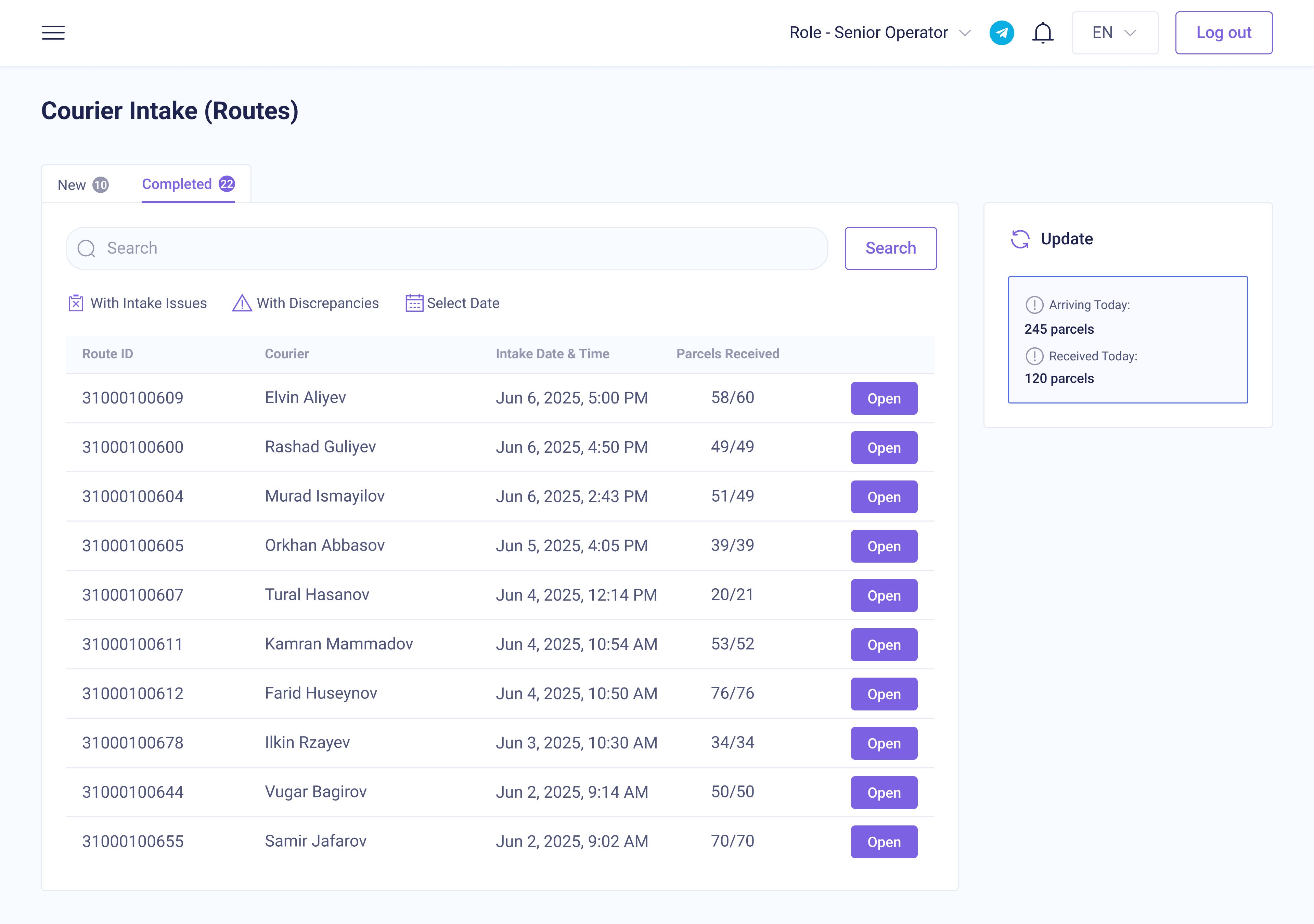
Every courier route shows its received parcels, with filters for discrepancies and intake issues



Home
Simplifying parcel pickup
workflows
0-to-1 Product • Logistics • Web & Android • MVP
Building a digital workflow that connects customers, couriers, and parcel operations. I designed the full warehouse platform across web and Android used daily by operators across 300+ pickup locations.
I owned the design of a 0-to-1 warehouse platform that started with no predefined requirements. I observed operations on-site, defined workflows for the web app and Android scanners, tested concepts with operators, and adapted Element Plus with the team to ship the MVP on a tight timeline.
Details
Web & Android
platform
Product Designer
role
Product Manager, Business Analyst, Developers, QA
team members
300+ pickup locations
scale
0-to-1 Product Design · AI-assisted Prototyping · On-site Research · Interaction Design for Web & Android · Usability Testing
scope
I used AI throughout the project to work faster with real operational complexity. I transcribed and synthesized warehouse observations and operator interviews, grouping issues by flow stage to find recurring problems. I generated realistic test data, hundreds of orders, parcels, barcodes, and statuses, so prototypes behaved like a real warehouse. I mapped scanner edge cases such as wrong boxes, duplicates, lost connection, and partially received deliveries. And I built quick interactive prototypes for usability testing and team discussions.
Product Impact
results after launch
−50%
Cost per
parcel
Reduced through workflow optimization
×4
Higher parcel
throughput
Enabled by simplified operations
−27%
Operational
errors
Reduced with guided workflows
+42%
Faster task
completion
Through streamlined workflows
BUSINESS GOAL
Scaling revenue meant digitizing the warehouse first
Enable the logistics business to scale and generate revenue through warehousing, packaging, and fulfillment services.
BUSINESS PROBLEM
Without one system, every location ran its own process
•
Warehouse operations relied on fragmented manual processes and spreadsheets
•
No unified system existed to manage the full parcel lifecycle
•
Operational processes varied between warehouses, making scaling across 300+ pickup locations difficult
•
Operators relied on personal experience instead of standardized workflows, resulting in inconsistent execution
PRODUCT CONSTRAINTS
The warehouse had to be digitized
without stopping it
•
No predefined product requirements at project kickoff
•
MVP delivery under a tight implementation timeline
•
The solution had to support both responsive web and Android handheld scanners
DESIGN 1/2 · ORDER PICKUP
Order Pickup Make a new operator as fast as an experienced one
Order Pickup is how parcels leave the warehouse: operators search for an order, verify the customer and payment, take payment, confirm collection, and update the status. Doing this quickly depended on operator experience. The interface had to guide each step, so any operator at any location could work the same way.
FINAL SOLUTION
Final design Information follows the task
The screen shows only what the current step needs. Primary actions like Hand Over and Refuse stay on each parcel, order details remain visible throughout, and extra information expands inline only when needed. Handover is confirmed with a one-time code sent to the recipient, so parcels can’t go to the wrong person.
DESIGN SYSTEM
Element Plus Reuse cut implementation time by 35%
I used Element Plus as the foundation for the web interface, adapting the existing component library to the product’s workflows and visual language. Reusing established components allowed the team to move faster while keeping the experience consistent across the product.
HYPOTHESIS
I hypothesized that keeping key actions in one place would help warehouse staff complete pickups faster and with fewer mistakes.
ITERATION
Concept A Everything in one view
The first concept kept all order information in one place to reduce navigation and give operators a complete view of each order.
USABILITY TESTING
Validation Information wasn’t the problem, guidance was
During testing, operators still spent time looking for the next action, which slowed down the pickup process. This showed the interface needed to prioritize the operator’s next action rather than showing all order information at once.
DESIGN 2/2 · BOX INTAKE
Box Intake Every scan had a price
Parcel intake was one of the highest-frequency operations in the warehouse, and every scanned parcel added to operational cost, so speed and accuracy directly shaped the cost per parcel. I designed an Android scanner workflow where several operators process a delivery at once, while the system validates parcels and syncs data automatically.
OPERATIONAL CONTEXT
Operators were paid per scan, so every extra tap cost them money
They processed thousands of parcels per shift on Android handheld scanners with small screens, scanning continuously for hours, and the MVP had a tight delivery timeline. Even a small delay multiplied across thousands of scans a day, slowing both individual earnings and warehouse throughput.
Work Areas
Scan Delivery
Start Scanning
Successful Scan
Error Handling
Delivery Complete
Completion
Delivery List
FINAL SOLUTION
Final design Keep operators in the scanning rhythm
Instead of interrupting operators with a confirmation screen after each scan, the final design uses persistent progress, lightweight feedback, and simplified completion actions. Testing confirmed that operators completed intake faster, with fewer interruptions and the same accuracy.
RESEARCH
On-site observation Seeing intake in practice
I visited the warehouse to observe parcel intake. Seeing the workflow firsthand helped me understand the physical constraints of high-frequency scanning and identify where small interactions could slow operators down.
HYPOTHESIS
I hypothesized that reducing interruptions during continuous scanning would help operators process parcels faster, reduce operational effort, and improve overall warehouse throughput.
ITERATION
Concept A Big confirmations broke the rhythm
The first concept prioritized explicit confirmation after every successful scan, with large success states, a prominent progress counter, oversized controls, and a personal productivity counter. Testing showed that confidence wasn’t the bottleneck, continuity was. Operators preferred to keep scanning without stopping, and they found the pause icon unclear as a completion action.
KEY INSIGHTS
Small interactions have measurable business impact
•
High-frequency warehouse workflows require balancing speed, accuracy, and cognitive effort rather than optimizing a single metric
•
Direct warehouse observation and early prototype validation uncovered workflow problems that analytics alone couldn’t reveal
•
Consistent interaction patterns reduce cognitive effort and help operators maintain speed during repetitive tasks
Before intake, operators scan a container and route it to direct stream, dangerous goods, or quarantine
Each parcel’s label is scanned into its cargo space, with product details and the assigned container visible at a glance
Returns are checked against customer photos and the return reason, so operators can accept or reject them in one view
Every courier route shows its received parcels, with filters for discrepancies and intake issues



Home
Simplifying parcel pickup
workflows
0-to-1 Product • Logistics • Web & Android • MVP
Building a digital workflow that connects customers, couriers, and parcel operations. I designed the full warehouse platform across web and Android used daily by operators across 300+ pickup locations.
I owned the design of a 0-to-1 warehouse platform that started with no predefined requirements. I observed operations on-site, defined workflows for the web app and Android scanners, tested concepts with operators, and adapted Element Plus with the team to ship the MVP on a tight timeline.
Details
Web & Android
platform
Product Designer
role
Product Manager, Business Analyst, Developers, QA
team members
300+ pickup locations
scale
0-to-1 Product Design · AI-assisted Prototyping · On-site Research · Interaction Design for Web & Android · Usability Testing
scope
I used AI throughout the project to work faster with real operational complexity. I transcribed and synthesized warehouse observations and operator interviews, grouping issues by flow stage to find recurring problems. I generated realistic test data, hundreds of orders, parcels, barcodes, and statuses, so prototypes behaved like a real warehouse. I mapped scanner edge cases such as wrong boxes, duplicates, lost connection, and partially received deliveries. And I built quick interactive prototypes for usability testing and team discussions.
Product Impact
results after launch
−50%
Cost per
parcel
Reduced through workflow optimization
×4
Higher parcel
throughput
Enabled by simplified operations
−27%
Operational
errors
Reduced with guided workflows
+42%
Faster task
completion
Through streamlined workflows
BUSINESS GOAL
Scaling revenue meant digitizing the warehouse first
Enable the logistics business to scale and generate revenue through warehousing, packaging, and fulfillment services.
BUSINESS PROBLEM
Without one system, every location ran its own process
•
Warehouse operations relied on fragmented manual processes and spreadsheets
•
No unified system existed to manage the full parcel lifecycle
•
Operational processes varied between warehouses, making scaling across 300+ pickup locations difficult
•
Operators relied on personal experience instead of standardized workflows, resulting in inconsistent execution
PRODUCT CONSTRAINTS
The warehouse had to be digitized without stopping it
•
No predefined product requirements at project kickoff
•
MVP delivery under a tight implementation timeline
•
The solution had to support both responsive web and Android handheld scanners
DESIGN 1/2 · ORDER PICKUP
Order Pickup Make a new operator as fast as an experienced one
Order Pickup is how parcels leave the warehouse: operators search for an order, verify the customer and payment, take payment, confirm collection, and update the status. Doing this quickly depended on operator experience. The interface had to guide each step, so any operator at any location could work the same way.
FINAL SOLUTION
Final design Information follows the task
The screen shows only what the current step needs. Primary actions like Hand Over and Refuse stay on each parcel, order details remain visible throughout, and extra information expands inline only when needed. Handover is confirmed with a one-time code sent to the recipient, so parcels can’t go to the wrong person.
DESIGN SYSTEM
Element Plus Reuse cut implementation time by 35%
I used Element Plus as the foundation for the web interface, adapting the existing component library to the product’s workflows and visual language. Reusing established components allowed the team to move faster while keeping the experience consistent across the product.
HYPOTHESIS
I hypothesized that keeping key actions in one place would help warehouse staff complete pickups faster and with fewer mistakes.
ITERATION
Concept A Everything in one view
The first concept kept all order information in one place to reduce navigation and give operators a complete view of each order.
USABILITY TESTING
Validation Information wasn’t the problem, guidance was
During testing, operators still spent time looking for the next action, which slowed down the pickup process. This showed the interface needed to prioritize the operator’s next action rather than showing all order information at once.
DESIGN 2/2 · BOX INTAKE
Box Intake Every scan had a price
Parcel intake was one of the highest-frequency operations in the warehouse, and every scanned parcel added to operational cost, so speed and accuracy directly shaped the cost per parcel. I designed an Android scanner workflow where several operators process a delivery at once, while the system validates parcels and syncs data automatically.
OPERATIONAL CONTEXT
Operators were paid per scan, so every extra tap cost them money
They processed thousands of parcels per shift on Android handheld scanners with small screens, scanning continuously for hours, and the MVP had a tight delivery timeline. Even a small delay multiplied across thousands of scans a day, slowing both individual earnings and warehouse throughput.
Work Areas
Scan Delivery
Start Scanning
Successful Scan
Error Handling
Delivery Complete
Completion
Delivery List
FINAL SOLUTION
Final design Keep operators in the scanning rhythm
Instead of interrupting operators with a confirmation screen after each scan, the final design uses persistent progress, lightweight feedback, and simplified completion actions. Testing confirmed that operators completed intake faster, with fewer interruptions and the same accuracy.
RESEARCH
On-site observation Seeing intake in practice
I visited the warehouse to observe parcel intake. Seeing the workflow firsthand helped me understand the physical constraints of high-frequency scanning and identify where small interactions could slow operators down.
HYPOTHESIS
I hypothesized that reducing interruptions during continuous scanning would help operators process parcels faster, reduce operational effort, and improve overall warehouse throughput.
ITERATION
Concept A Big confirmations broke the rhythm
The first concept prioritized explicit confirmation after every successful scan, with large success states, a prominent progress counter, oversized controls, and a personal productivity counter. Testing showed that confidence wasn’t the bottleneck, continuity was. Operators preferred to keep scanning without stopping, and they found the pause icon unclear as a completion action.
KEY INSIGHTS
Small interactions have measurable business impact
•
High-frequency warehouse workflows require balancing speed, accuracy, and cognitive effort rather than optimizing a single metric
•
Direct warehouse observation and early prototype validation uncovered workflow problems that analytics alone couldn’t reveal
•
Consistent interaction patterns reduce cognitive effort and help operators maintain speed during repetitive tasks
Before intake, operators scan a container and route it to direct stream, dangerous goods, or quarantine
Each parcel’s label is scanned into its cargo space, with product details and the assigned container visible at a glance
Returns are checked against customer photos and the return reason, so operators can accept or reject them in one view
Every courier route shows its received parcels, with filters for discrepancies and intake issues

